
How Do Online Slots Actually Work?
Every spin on a licensed online slot is decided by a certified random number generator the instant you press play — not by a hidden pattern, a "hot" or "cold" streak, or anything you can influence through timing or technique. This guide explains the mechanics properly, using the Gates of Olympus family as a worked example throughout.

The Random Number Generator
At the core of every licensed online slot is a random number generator, or RNG: certified software that produces a fresh, independent outcome for every single spin. The RNG doesn't "remember" your last spin, your total losses, how long you've been playing, or what time it is. Each spin is a discrete, isolated event, mathematically unconnected to the one before it. This is the single most important fact to internalise about slots, because so many common misconceptions ("it's due for a win," "it just paid out so it won't again soon," "spin faster to change the outcome") are direct violations of how an RNG works.
Regulated operators must use RNGs certified by independent testing laboratories before a game can be licensed. That's a more reliable guarantee than taking a studio's word for fairness — independent testing is the actual safety net, not brand reputation.
Reels, Grids and Symbols
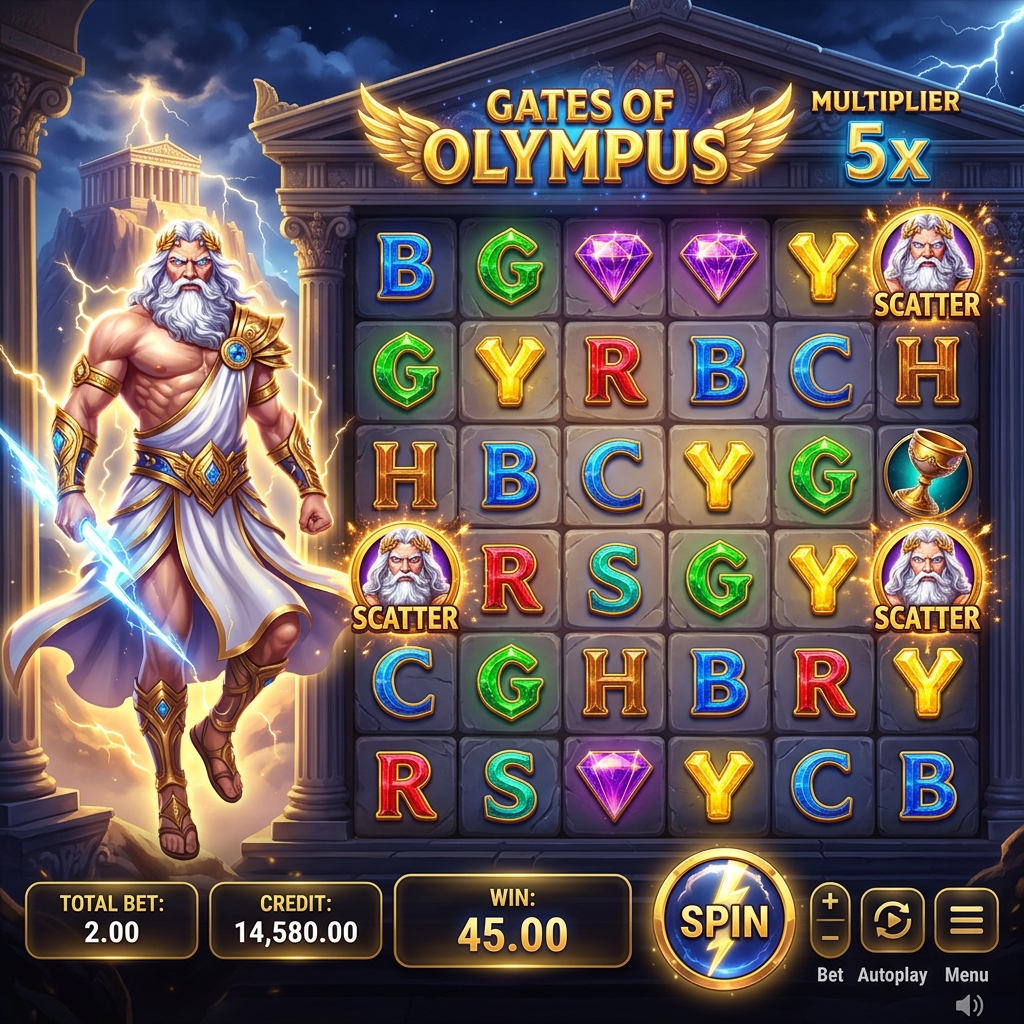
Traditional slots present a grid of reels and rows, with specific symbol combinations along defined paylines triggering a win. The Gates of Olympus family uses a variation of this: a 6-reel, 5-row grid with a "pay-anywhere" rule rather than fixed paylines — land eight or more matching symbols anywhere across the grid, regardless of position, and they pay out. This removes the need to track specific line patterns, which is one reason the family is considered relatively easy to read visually even though its underlying volatility is high.
Tumble and Cascade Mechanics
Many modern slots, including all three Gates of Olympus games, use a tumble (or cascade) mechanic: winning symbols clear from the grid after paying out, and new symbols drop in from above to fill the gaps — potentially creating a new winning combination from the same spin, which can chain repeatedly until no further wins form. This is different from a traditional slot where one spin produces, at most, one evaluation of the grid. A tumble mechanic means a single spin can deliver several consecutive wins, each one independently evaluated as new symbols settle into place.
Multipliers and Bonus Features
On top of the base tumble mechanic, studios layer additional features to shape a game's personality — in the Gates of Olympus family, this is the multiplier orb system, where random orb values can land on any spin and apply to any win generated on that same spin. Other studios use different systems (collector wilds, Hold & Win respins, cluster multiplier spots), but the underlying principle is consistent: a bonus feature adds variance and win potential on top of the base game's core resolution, without changing the fundamental randomness of any individual spin.
What RTP and Volatility Actually Describe
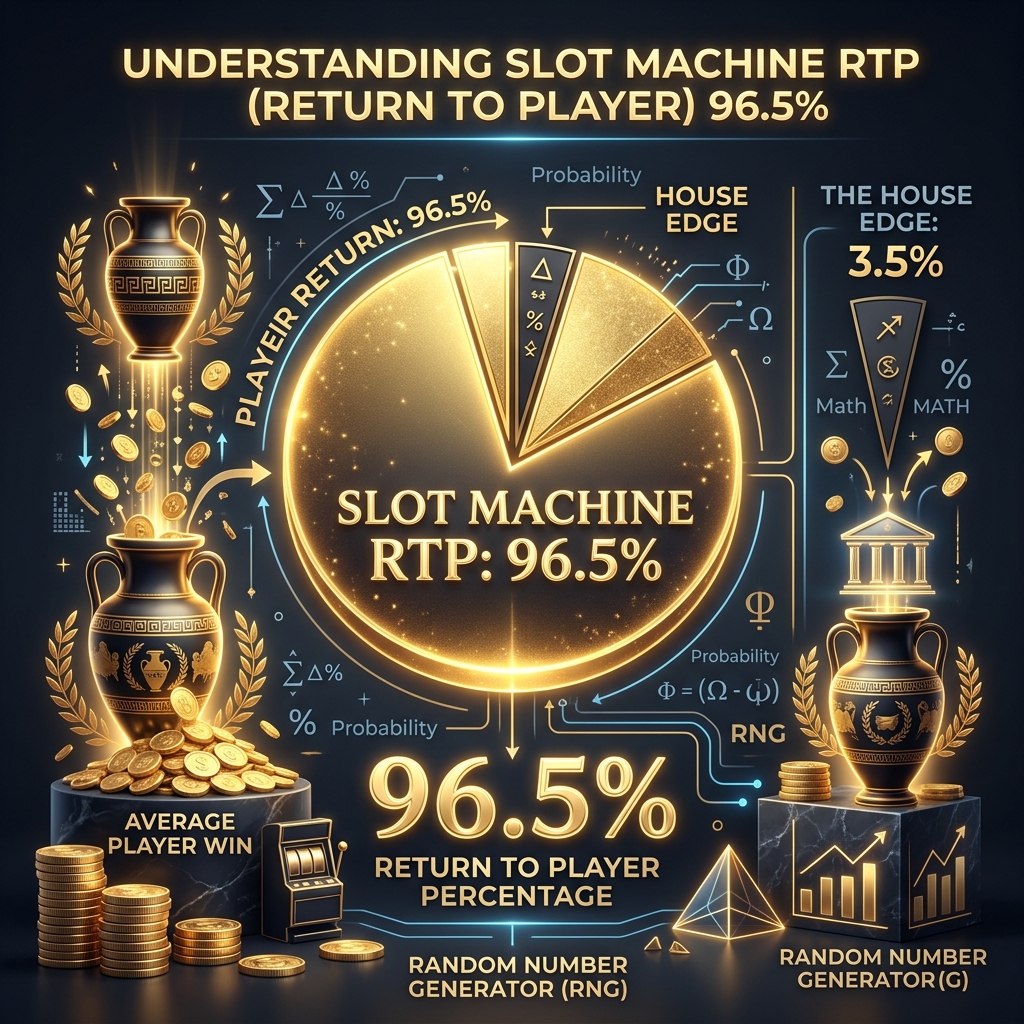
Return to player (RTP) is a theoretical long-run average — the percentage of all money wagered that a game is mathematically designed to pay back across an enormous number of spins, calculated and certified before the game launches. Volatility describes how that return is distributed: a low-volatility game pays smaller amounts more often, while a high-volatility game (like every title in the Gates of Olympus family, all rated 5 out of 5) pays less frequently but with a higher ceiling when it does. Neither figure predicts what will happen in your next session — both describe statistical behaviour across a sample size far larger than any individual player will ever personally generate. See our dedicated RTP Explained and Volatility Explained guides for the full breakdown of each.
Common Misconceptions Worth Retiring
- "It's due for a win" — false. Each spin is independent; there is no accumulating probability from a dry spell.
- "Playing at a certain time of day changes my odds" — false. The RNG has no connection to the clock.
- "Stopping the reels manually changes the outcome" — false. The result is determined the instant the spin is triggered, before any animation plays.
- "A casino can adjust a live game's RTP to punish me" — false for licensed, regulated operators. RTP configuration is fixed before a session starts.
- "Bigger bets improve my odds of triggering a bonus" — generally false, with the specific exception of a documented feature like Gates of Olympus's Ante Bet, which explicitly and transparently changes trigger probability in exchange for a higher stake — see the Gates of Olympus review for how that specific mechanic works.
Why Certification Matters More Than Reputation
It's tempting to trust a big, well-known studio name as a proxy for fairness, but the actual guarantee comes from independent certification, not brand recognition alone. Regulators require RNG and payout mathematics to be tested by accredited laboratories before a game can be licensed in their market — this is what makes a "certified" game meaningfully different from an unverified one, regardless of how polished its presentation looks. When choosing where to play, the operator's licence (not just the game studio's reputation) is what tells you this certification chain is actually being enforced for the specific site you're using.
How This Applies to the Gates of Olympus Family Specifically
All three games covered on Gates Hub — the original, Gates of Olympus 1000, and Super Scatter — share the same RNG-driven, pay-anywhere, tumble-based foundation described above. What differs between them is the shape of their bonus features: orb multiplier caps for the original and 1000, and a tiered Super Scatter symbol system for the third. None of that changes the fundamental randomness of any individual spin — it changes the range and distribution of possible outcomes once a win occurs. Understanding the mechanics on this page is the fastest way to read any of the three individual reviews with real comprehension rather than taking specs at face value.
A Worked Example: One Spin From Start to Finish
Walking through a single Gates of Olympus spin makes the abstract mechanics concrete. The moment you press spin, the RNG has already determined the outcome — every symbol position across all 30 cells (6 reels × 5 rows) and whether any orb multipliers will land, all calculated before the reel animation even starts. The visual spin is a presentation layer, not the moment of determination. If eight or more matching symbols exist anywhere on the resulting grid, they're evaluated as a win; if an orb also landed, its multiplier value is applied to that win.
Complete Gates Hub Guides Collection
Explore our full range of slot guides designed to help you understand mechanics, variance, RTP, and bankroll management:
How to Play
Step-by-step guide on rules, scatter symbols, and free spins.
How Slots Work
Comprehensive breakdown of RNG, reels, and tumble mechanics.
RTP Explained
Understanding theoretical payout percentages and house edge.

Volatility Explained
High variance, hit frequency, and payout distribution.
Slot Strategy & Myths
Debunking common slot myths and setting realistic expectations.

Bankroll Management
Budgeting strategies, stop-loss limits, and session planning.
Frequently Asked Questions
What is an RNG?
A random number generator — the certified software that determines every spin's outcome independently, with no memory of previous spins and no connection to the time of day, your stake size, or how long you've been playing.
Is a slot ever "due" for a big win?
No. Each spin is generated independently by the RNG. A game that hasn't paid out recently is not statistically more likely to pay out on the next spin than it was on any previous spin.
What is a tumble or cascade mechanic?
A system where winning symbols clear from the grid and new symbols drop in to replace them, potentially chaining multiple wins from a single spin — used in all three Gates of Olympus games.
Can a casino change my odds mid-session?
No, not for a licensed, regulated operator. The RTP configuration is fixed at the operator level before a session starts, not adjusted live in response to individual play.
Does stopping the reels manually change the result?
No. The outcome is determined by the RNG the instant the spin is triggered — any stop animation is purely visual and has no effect on the already-determined result.
Why does Gates of Olympus feel different from a traditional payline slot?
Because it uses a pay-anywhere cluster rule instead of fixed paylines, combined with a tumble mechanic that can chain multiple wins from one spin — a genuinely different visual and mechanical experience from a classic three-reel or fixed-line game.
See the mechanics in action
Read the full Gates of Olympus review for a worked example of tumble wins and orb multipliers.
Play Now — 18+ Gamble Responsibly